Free resource · No account needed
Bullying at work diary template (UK)
Use this free template to keep a clear, dated record of workplace incidents. Copy it into your own document, download a blank text copy, or print it. Record what happened, when and where, who was there, any supporting material, and what happened next.
You do not need to decide whether something legally counts as bullying before recording the facts. The same structure can help with unwanted remarks, unfair treatment or other workplace concerns.
The branded PDF has two A4 pages with space for your incident record, supporting material and follow-ups. On iPhone or iPad, choose Save to Files from the share sheet. Saving or cancelling keeps this page open. Complete your own saved or printed copy; there is no incident form on this page.
If your device does not open saving, open the PDF in a separate browser window.
Preview the branded PDF (2 pages)
Preview both pages here without leaving EviDiary. Use Download PDF template above to save the actual PDF.
EviDiary · Workplace records
Workplace incident diary
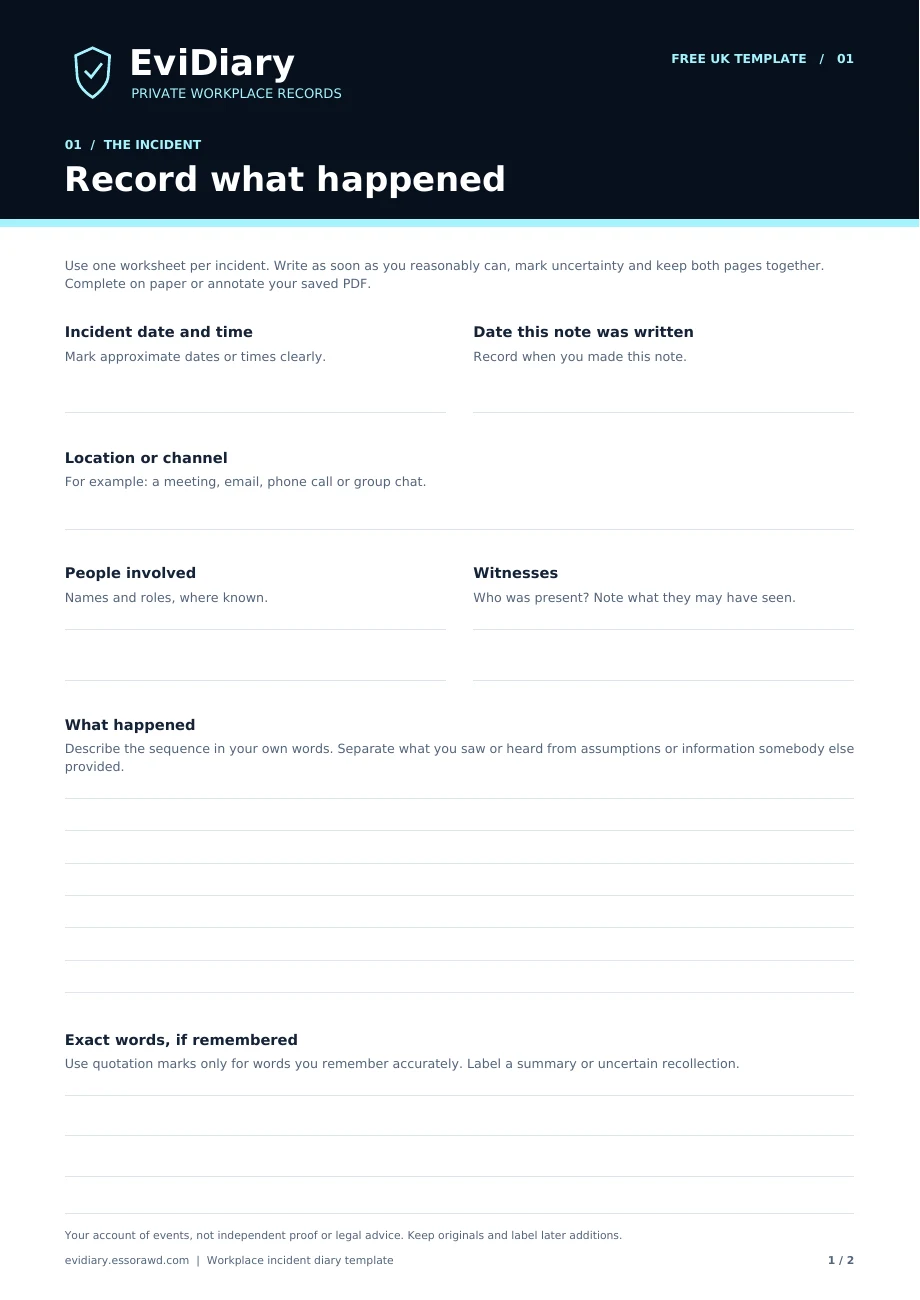
Use one copy per incident. Note what you remember, mark anything uncertain, and record when you wrote the note.
- Incident date and time
- When did it happen? Mark approximate dates or times clearly.
- Date this note was written
- Record when you made this note, especially if writing later.
- Location or channel
- For example: meeting room, phone call, email or group chat.
- People involved
- Names and roles, where known.
- What happened
- Describe what you saw or heard. Use exact words only if you remember them; separate facts, recollections and assumptions.
- Witnesses
- Who was present, and what might they have seen or heard? Do not assume they agree with your account.
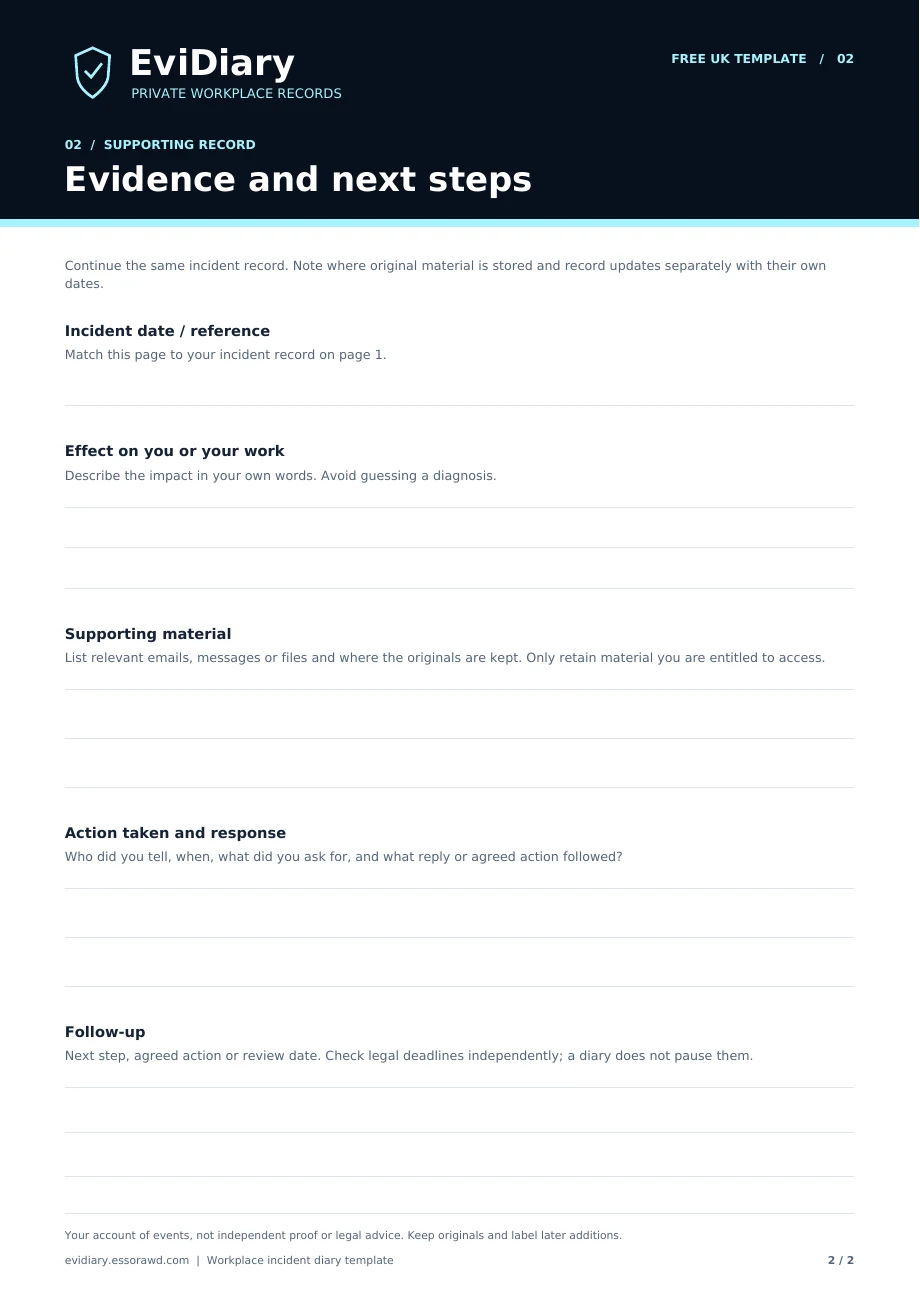
- Effect on you or your work
- Describe the impact in your own words without guessing a diagnosis.
- Supporting material
- List relevant emails, messages or files and where the originals are stored. Only retain material you are entitled to keep.
- Action taken and response
- Who did you tell, when, what did you ask for, and what response did you receive?
- Follow-up
- Next step, agreed action or review date. A diary is not a substitute for checking legal deadlines.
Keep original files and label later additions. This template helps organise your account; it does not verify allegations or replace legal advice. Source: evidiary.essorawd.com/bullying-at-work-diary-template-uk
How to keep a useful bullying diary
- Write promptly. Record the incident as soon as you reasonably can. If you write later, include the date of the incident and the date of your note.
- Be specific. Describe words, actions and context. Put quotation marks around words only if you remember them accurately. Label estimates and separate what you saw from what somebody told you.
- Keep the supporting context. Note relevant emails, messages and witnesses. Retain originals and only keep information you are entitled to access. Do not take unrelated confidential work material.
- Record the response. Add who you reported it to, what you asked for and any reply. Keep later updates separately so it is clear when each note was made.
- Store it safely. Use a personal device and secure account where possible. Take care with shared devices, workplace email, cloud backups and printed copies.
Example entry: facts and uncertainty
Fictional example — adapt the structure to your own facts
Incident: 22 October, approximately 10 am, team video call. Note written: 22 October, 6 pm. My manager said my work was “a waste of time” while discussing the draft. I remember that phrase; I cannot recall the rest exactly. Sam and Alex were on the call. I asked by email which corrections were needed. I have kept the reply with the original draft. I felt embarrassed and had difficulty concentrating afterwards. Follow-up: ask for specific feedback in writing.
Can this help with HR or tribunal evidence?
A dated record can help you explain the sequence of events and identify relevant supporting material. It is your account, rather than independent proof. Do not assume that a template, timestamp or file fingerprint guarantees acceptance or a successful claim. Keep originals and obtain advice about the evidence and deadlines relevant to your situation.
Keeping a diary or raising a grievance does not by itself stop a tribunal deadline. Check current advice promptly if you may need to make a claim. The UK includes different legal systems: Acas guidance applies to Great Britain; Northern Ireland has separate employment law and the Labour Relations Agency.
Want to keep everything in one place?
EviDiary combines text incidents, supporting evidence, follow-ups and a dated timeline. The Free plan includes text records and 50 MB of evidence storage. Chronology PDF reports require Plus, or a Case Pack for that specific case. This blank template remains free.
Sources and further help
- Acas: recording and reporting bullying
- Acas: current employment tribunal time limits
- Labour Relations Agency: Northern Ireland advice
- How to keep a workplace bullying evidence diary
- Build a workplace incident timeline for HR
Prepared by EviDiary. Last reviewed 25 October 2026. General recording information, not individual legal advice.